

Introducing Radiology: Artificial Intelligence’s first Staff Deputy Editor
by Madeline S. Cappelloni
Since its first volume, Radiology: Artificial Intelligence has relied on the talents of full-time academics and clinicians to evaluate candidate manuscripts. As far as I can tell, these individuals have access to some sort of time-bending magic; indeed, the editors of this journal (Dr. Kahn and the Deputy Editors) are among the most hardworking, competent, and kind people I’ve had the pleasure to work with.
Yet, as AI has enraptured researchers, clinicians, businesses, and the general public, the journal’s submission volume has grown dramatically, testing the limits of our editorial team. To make sure each submission gets the time and attention it deserves without delays, I became the first RSNA Staff Deputy Editor this past September.
What do I do here at RSNA?
Because of my full-time role, I have more time to thoroughly evaluate each submission’s presentation, methodological rigor, and potential impact, ultimately submitting my findings to the other Deputy Editors and Editor. This work supports the journal’s ability to make fair, informed decisions about candidate manuscripts. The effort required to compile a manuscript can best be described as “gargantuan”; it is my honor and duty to treat each manuscript with care and curiosity.
I also help to curate our social media feeds (including the posts on this blog) and serve as a writing resource for the Trainee Editorial Board. In all my responsibilities, I rely on my years of experience as an academic developmental editor (i.e., helping scientists with the content, structure, logic, phrasing, and grammar of their academic writing) and writing tutor and adjunct professor.
How did I get here?
Outside of my academic career, I’m a textile and visual artist. Indeed, I’m told that my art tells you everything you need to know about me—that I’m patient, detail-oriented, and extremely deliberate in everything I do. These are the qualities that also have drawn me to research and academic publishing.
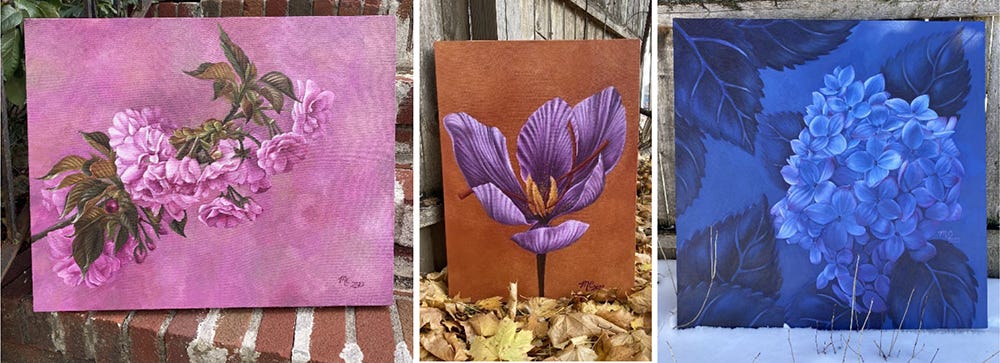
My love of art (and music) inspired me to study audiovisual perception during my PhD years. Under the mentorship of Ross Maddox, I conducted behavioral experiments to determine how the brain interprets complex sensory scenes. Functionally, this entailed placing undergraduate students in a soundproof booth, presenting them with a bizarre (but carefully designed) concoction of sounds and sights, and asking them to press buttons based on what they heard and saw. Then came the hard part—using analytical tools to make sense of the resulting mess of data. Much like radiologists have turned to AI to help make sense of medical images, the field of neuroscience is recognizing the value of machine learning to reveal the secrets of the brain.
Despite my love of research and technical background, I have not seen myself as a researcher for several years. Rather, I am passionate about helping authors and journals publish good science, making sure that science is accessible to readers, and ensuring that the publishing process is as smooth as possible. My work as an editor and educator is how I advance human knowledge.
I feel incredibly lucky to be working with the team behind Radiology: Artificial Intelligence. Like the researchers who conduct the excellent research we publish and the readership of the journal, I learn something new about this fascinating field every day.

Madeline (Maddy) Cappelloni earned her PhD in Biomedical Engineering from the University of Rochester. She has worked as a Developmental Editor, working directly with scientists to improve the quality of their academic manuscripts, and an undergraduate writing instructor. She now serves as a Staff Deputy Editor for Radiology: Artificial Intelligence.